
Introduction
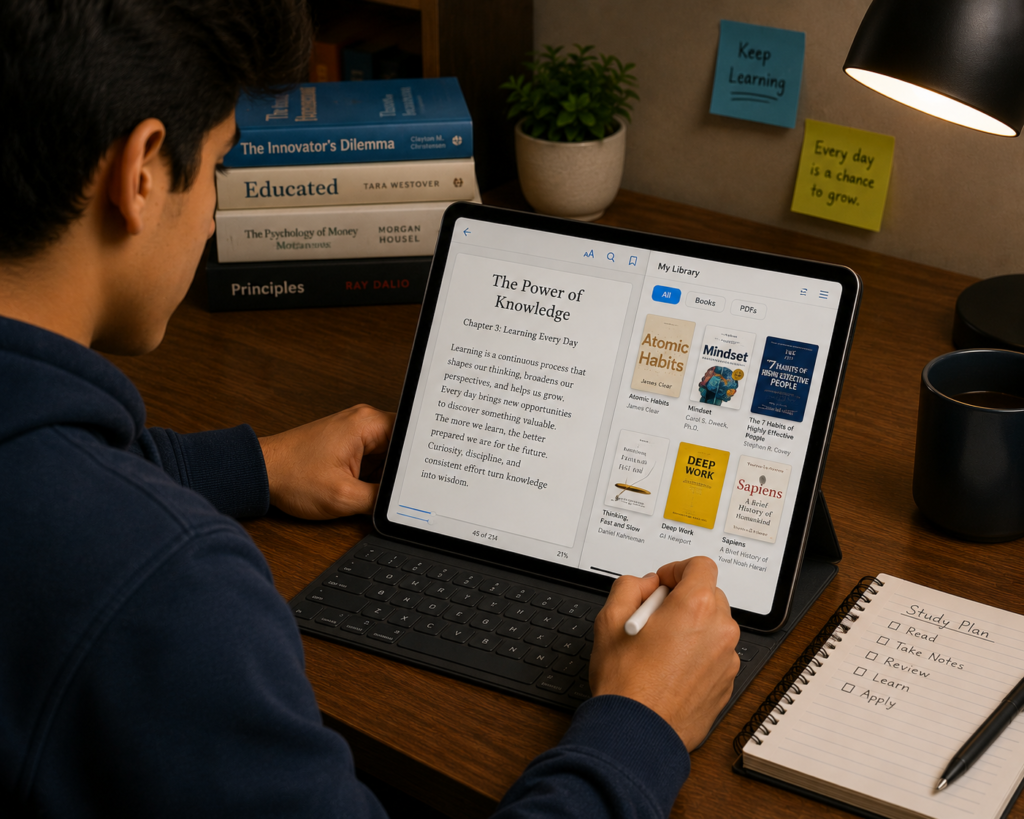
Books have traditionally been associated with printed pages, covers, shelves, and physical libraries. However, technology has changed the way people create, access, and read books. Today, readers can access thousands of titles electronically using computers, tablets, smartphones, and dedicated reading devices.
These electronic books are commonly known as e-books, short for electronic books.
An e-book contains written content in a digital format that can be viewed on a compatible electronic device or reading application. Depending on the file format and platform, an e-book may include text, images, hyperlinks, tables, illustrations, and other digital features.
E-books have become useful for students, researchers, teachers, professionals, and general readers. They can make reading more portable and provide convenient access to large collections of information.
However, e-books are not simply digital copies of printed books. Digital formats can offer additional features such as text search, adjustable font sizes, bookmarks, and accessibility tools.
This guide explains what e-books are, how they work, the different types available, their advantages and limitations, and how readers can use them effectively.
What Is an E-Book?
An e-book is a book that is distributed in a digital format rather than as a physical printed copy.
Instead of turning paper pages, readers view the content on a screen.
E-books may be available through:
- Digital libraries.
- Online bookstores.
- Educational platforms.
- Publishers.
- Institutional repositories.
- Public-domain collections.
- Authorized websites and applications.
Access conditions vary. Some e-books are freely available, while others require purchase, borrowing, registration, or a subscription.
Readers should always use e-books through legitimate sources and follow copyright and licensing requirements.
How Do E-Books Work?
An e-book is stored as a digital file or provided through an online reading system.
Common formats include EPUB and PDF, although other formats and platform-specific systems also exist.
The reading experience depends on the format.
For example, EPUB is commonly designed to adapt text to different screen sizes, while PDF generally preserves a fixed page layout.
Readers can open compatible files using computers, tablets, smartphones, or dedicated e-reading devices.
Common E-Book Formats
EPUB
EPUB is a widely used e-book format.
One of its major advantages is that text can often reflow according to the size of the screen. This can make reading more comfortable on different devices.
PDF files preserve a fixed document layout.
They are commonly used for academic papers, manuals, reports, and scanned books.
PDFs can be convenient when the exact page design needs to remain unchanged.
Web-Based Reading
Some books are not downloaded as files at all. Instead, they are accessed through an online reading platform.
The reader opens the resource in a web browser and reads it through the platform’s interface.
Why Have E-Books Become Popular?
One major reason is convenience.
A reader can carry many digital books on a single device instead of carrying several physical volumes.
Digital books can also be easier to search and organize. Depending on the software or platform, readers may be able to search for a word, bookmark a page, highlight text, or change the display settings.
For students, these features can be particularly useful when reviewing educational material.
1. E-Books Are Portable
A single tablet or laptop can contain a large collection of digital books.
This can be useful for students who need several resources for different subjects.
Instead of carrying multiple heavy books, a reader can access digital materials from one device.
However, device battery life and storage should also be considered when relying heavily on digital reading.
2. E-Books Can Be Easy to Search
Many digital reading applications allow users to search for specific words or phrases.
This is particularly useful for research.
For example, a student reading a long academic document can search for a particular term instead of manually looking through every page.
Search functionality can save time when locating specific information.
3. E-Books Offer Adjustable Reading Settings
Many e-book applications provide display options such as:
- Font size.
- Font style.
- Screen brightness.
- Background settings.
- Page layout.
The exact features depend on the application and file format.
Adjustable settings can make digital reading more comfortable for different users.
4. E-Books Can Support Accessible Reading
Digital formats can provide accessibility features that may not be available in every printed book.
Depending on the device and software, readers may be able to use:
- Screen readers.
- Text enlargement.
- Text-to-speech.
- Adjustable display settings.
- Search functions.
These features can make some digital materials easier to access.
However, accessibility depends on how the e-book itself was created. A poorly designed digital document may still create barriers for some readers.
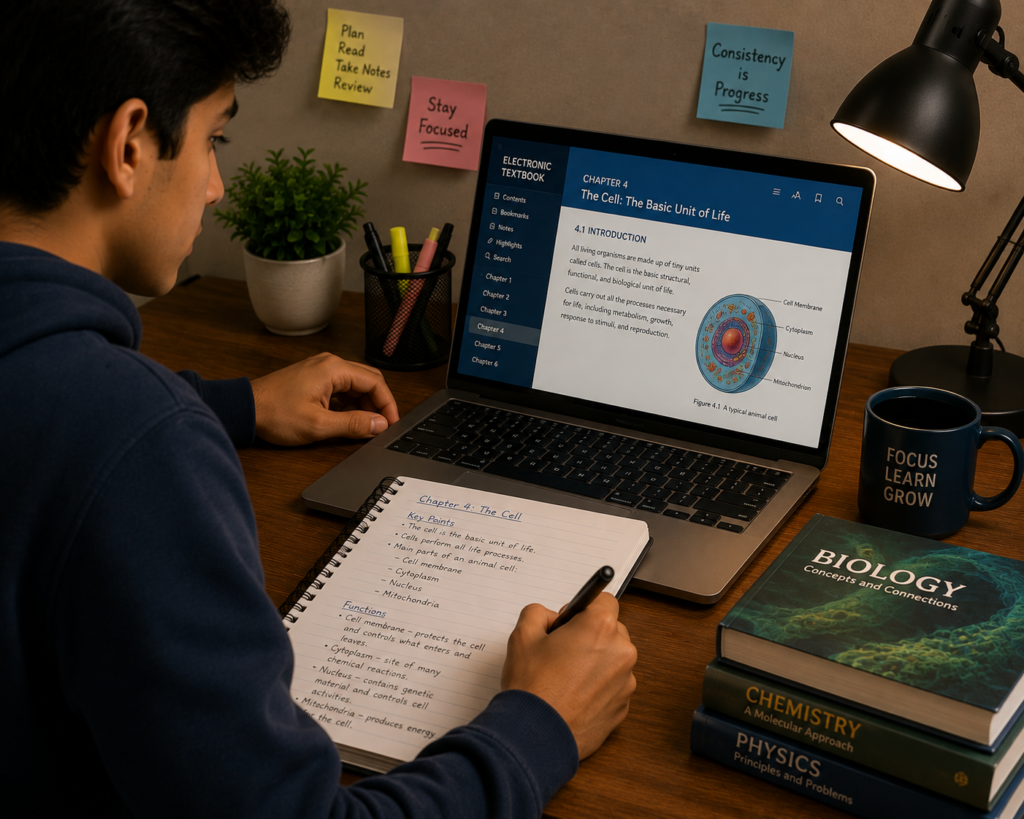
5. E-Books Can Support Students
Students can use e-books for many educational purposes.
They may access:
- Textbooks.
- Reference books.
- Literature.
- Research material.
- Study guides.
- Educational articles.
Digital resources can also make it easier to search for specific concepts and organize multiple sources.
Students should verify that educational resources are reliable and appropriate for their assignments.
6. E-Books Can Support Research
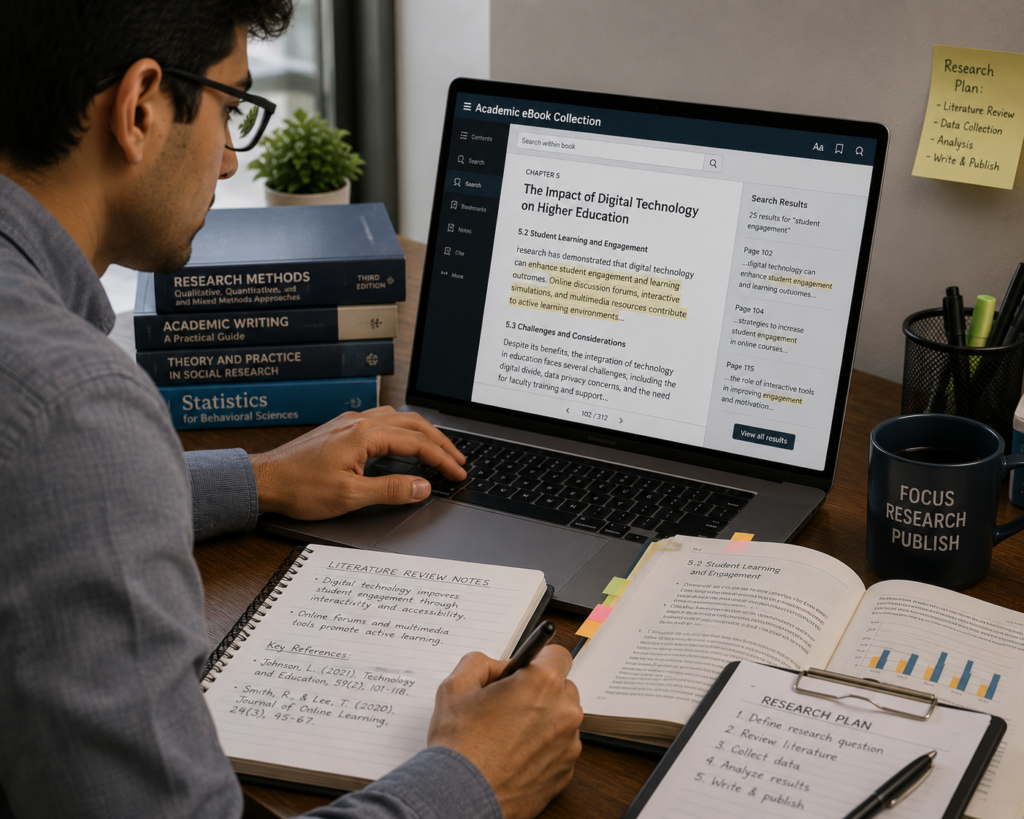
Researchers often work with large amounts of written information.
Digital books can make research more efficient because readers can search within documents, copy permitted quotations into notes, bookmark useful sections, and organize references.
However, researchers should carefully follow copyright rules and academic citation requirements.
When using information from an e-book in an assignment or research paper, the source should be cited according to the required citation style.
7. E-Books Can Save Physical Space
A physical library can require significant shelf space.
Digital collections can store many resources without requiring physical shelves for every title.
This can be particularly useful for students living in small spaces or organizations managing large collections.
Digital storage still requires appropriate technology and data management, but it can reduce the physical space required for books.
8. E-Books Can Provide Quick Access
A digital book can often be accessed immediately after it has been legally purchased, borrowed, or made available.
There is no need to wait for physical delivery when the resource is available digitally.
Digital libraries can also allow users to search their collections quickly.
Access depends on the platform, licensing conditions, internet availability, and the user’s account or permissions.
9. E-Books Can Include Interactive Features
Some digital books include features that are difficult to reproduce in traditional printed books.
Depending on the publication, these may include:
- Hyperlinks.
- Search functions.
- Audio.
- Video.
- Interactive diagrams.
- Embedded references.
Not every e-book includes these features. The experience depends on the publisher, format, and reading platform.
10. E-Books Are Useful for Remote Learning
Students do not always have access to a physical library.
Digital resources can provide additional learning opportunities from home or other locations.
For online classes and distance learning, e-books can complement lectures, assignments, and other educational materials.
Students can access authorized digital resources using compatible devices and internet connections when required.
E-Books vs. Printed Books
Both digital and printed books have advantages.
| Feature | E-Books | Printed Books |
|---|---|---|
| Portability | Easy to carry digitally | Physical weight |
| Search | Usually available | Manual |
| Font adjustment | Often available | Not available |
| Battery required | Usually yes for electronic devices | No |
| Physical pages | No | Yes |
| Storage | Digital storage | Shelf space |
| Accessibility features | May be available | Limited by physical format |
| Internet | Sometimes required | Usually not required |
The best choice depends on the reader and the situation.
Some people prefer printed books because they enjoy physical pages, while others prefer digital books because of their portability and search features.
There is no requirement to choose only one format.
Limitations of E-Books
E-books are convenient, but they also have limitations.
Screen Fatigue
Long periods of screen use can be uncomfortable for some readers.
Taking regular breaks and adjusting the display can make digital reading more comfortable.
Device Dependence
A digital book requires a compatible device or reading application.
If the device runs out of battery or becomes unavailable, access may be interrupted.
Licensing Restrictions
Some e-books are protected by digital rights management or licensing conditions that limit copying, printing, sharing, or transferring.
Readers should follow the terms provided by the publisher or platform.
Digital Distractions
Reading on a connected device can expose users to notifications, messages, and unrelated applications.
A distraction-free reading environment can help.
How to Choose a Good E-Book
Before selecting an e-book, consider:
1. Purpose
Are you reading for study, research, entertainment, or personal interest?
2. Source
Is the e-book provided by a legitimate and trustworthy platform?
3. Author
Does the author have relevant knowledge or experience?
4. Publication Information
Check the publisher, edition, and publication date when these details are relevant.
5. Format
Make sure the e-book works with your device or reading application.
6. Reviews
Reviews can provide additional information about readability and usefulness, although they should not be your only source of evaluation.
How Students Can Use E-Books Effectively
Students can develop a simple digital reading system.
First, organize books into folders according to subjects.
For example:
- Computer Science
- Physics
- English
- Research
- General Reading
Then use bookmarks or notes to identify important sections.
During study sessions, keep unrelated applications closed to reduce distractions.
After reading, summarize important information in your own notes.
This can make digital reading more organized and useful.
The Future of E-Books
E-books continue to develop alongside digital reading technology.
Future digital publications may provide more interactive features, improved accessibility, better search systems, and greater integration with educational platforms.
Artificial intelligence and other technologies may also influence how digital content is organized and discovered.
However, the basic purpose remains the same: providing readers with access to written knowledge and information in a digital format.
The growth of e-books does not necessarily mean that printed books will disappear. Many readers continue to enjoy physical books, and both formats can exist together.
Conclusion
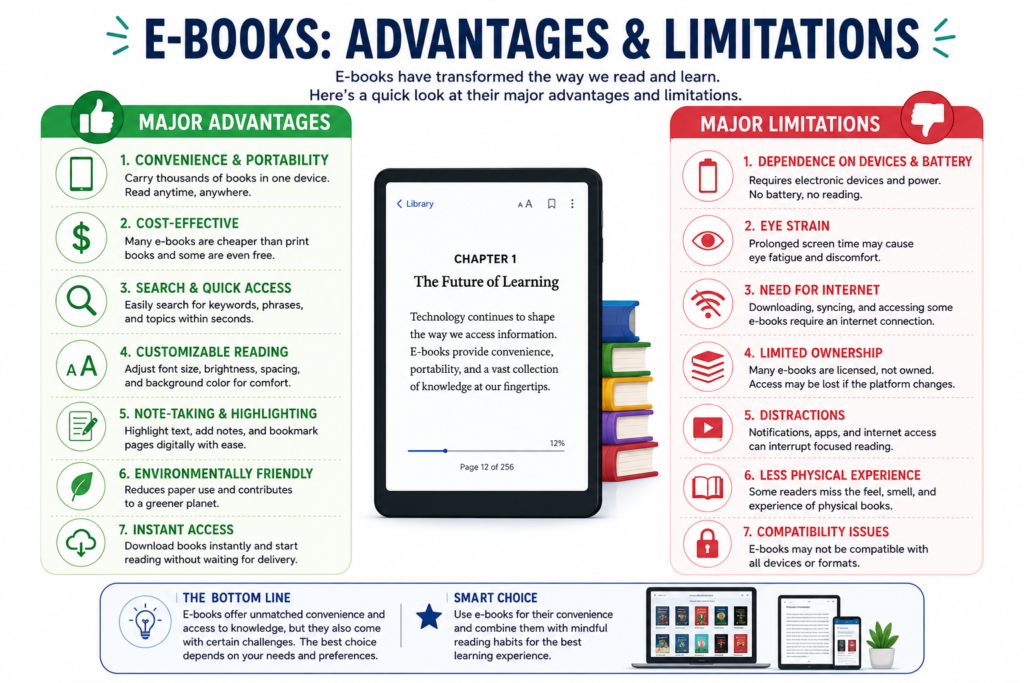
E-books have changed the way many people access and read books. They provide a convenient digital alternative to traditional printed materials and can offer useful features such as search, adjustable text, bookmarks, and accessibility options.
For students and researchers, e-books can make it easier to carry, organize, and search large amounts of information. Digital libraries can further expand access to electronic books and educational resources.
At the same time, e-books have limitations. Readers may need compatible devices, battery power, and appropriate software. Licensing and copyright restrictions also need to be respected.
Ultimately, the choice between an e-book and a printed book depends on personal preference and purpose. Both formats can support learning, research, and enjoyment.
The most important consideration is not whether a book is digital or physical, but whether the resource is reliable, appropriate, accessible, and useful for the reader’s needs.
Frequently Asked Questions
1. What is an e-book?
An e-book is a book provided in a digital format that can be read using a computer, tablet, smartphone, e-reader, or compatible application.
2. What are the most common e-book formats?
EPUB and PDF are two widely used formats, although other formats and platform-specific systems also exist.
3. Are e-books better than printed books?
Neither format is universally better. The best choice depends on the reader’s needs, preferences, and situation.
4. Can students use e-books for studying?
Yes. E-books can provide access to textbooks, reference materials, literature, and other educational resources.
5. Can e-books be used for research?
Yes. Digital books can be useful research sources, especially when they provide search, bookmarking, and other organizational features.
6. Do e-books require the internet?
Not always. Some e-books can be downloaded for offline reading, while others require an internet connection or online platform access.
7. Are e-books accessible?
Many digital formats and reading applications provide accessibility features such as text enlargement and screen-reader support. Accessibility depends on the format, publication, and software.
8. Are free e-books legal?
Some e-books are legally free, including certain public-domain works and resources released under appropriate licenses. Readers should use legitimate sources and respect copyright restrictions.