
Introduction
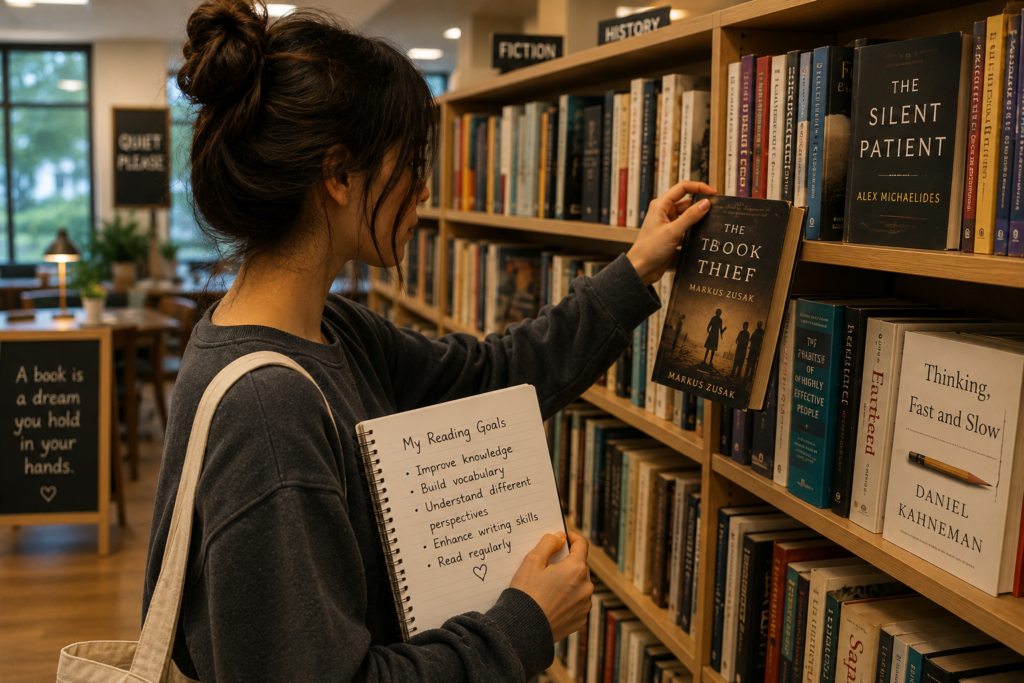
Choosing a book may seem simple, but with thousands of books available in libraries, bookstores, and digital collections, finding the right one can sometimes be difficult. A book that is useful for one reader may not be suitable for another.
Students especially need to choose books carefully. A good book can provide helpful information, explain difficult concepts, improve reading skills, and encourage curiosity. The wrong book, however, may be too difficult, too basic, outdated, or unrelated to the student’s learning goals.
Choosing a book does not mean selecting the most popular title or the one with the most attractive cover. It means considering your purpose, interests, reading level, the quality of the information, and the amount of time you have available.
This guide explains practical ways students and general readers can choose suitable books for reading and study.
Why Choosing the Right Book Matters
The right book can make reading more useful and enjoyable.
A suitable book can help you:
- Understand a subject.
- Develop vocabulary.
- Explore new ideas.
- Improve reading comprehension.
- Support schoolwork.
- Develop research skills.
- Discover new interests.
- Build a regular reading habit.
When a book matches your needs and ability level, you are more likely to understand it and finish it.
1. Decide Why You Want to Read
The first question should be:
Why am I choosing this book?
Your purpose could be:
- Studying for an examination.
- Completing an assignment.
- Learning a new subject.
- Improving English.
- Reading for enjoyment.
- Researching a topic.
- Exploring a particular author.
- Developing a specific skill.
Your purpose will immediately narrow down your choices.
For example, a student preparing a research project needs a different type of book from someone looking for a novel to read during free time.
2. Identify Your Topic
If you are selecting a book for study, begin with the subject you need to understand.
For example:
Subject: Digital technology
Possible book topics:
- Digital education.
- Computer science.
- Internet technology.
- Information systems.
- Digital learning.
A specific topic makes it easier to search library catalogues and digital collections.
3. Consider Your Reading Level
A book should be challenging enough to teach you something but understandable enough that you can follow the main ideas.
If every page contains unfamiliar vocabulary and complicated concepts, the book may be difficult to use independently.
On the other hand, a book that is far below your current level may not provide enough challenge.
Consider:
- Vocabulary.
- Sentence structure.
- Subject complexity.
- Amount of background knowledge required.
If possible, read a few pages before deciding.
4. Read a Sample Before Choosing
When a sample is available, read it.
Ask yourself:
- Can I understand the writing?
- Is the topic interesting?
- Is the explanation clear?
- Does the book match my purpose?
- Would I enjoy reading more of it?
For digital books, a preview may help you make this decision.
For physical books, read a few pages from different sections if possible.
5. Check the Author
The author can provide useful information about a book’s background.
For educational or research books, consider:
- The author’s qualifications.
- Academic or professional background.
- Experience in the subject.
- Other published works.
For fiction, you may want to explore the author’s previous books and writing style.
Knowing more about the author can help you decide whether the book is suitable for your purpose.
6. Check the Publication Date
The publication date is particularly important for study and research.
Some subjects change quickly, including:
- Technology.
- Computer science.
- Medicine.
- Current affairs.
- Education policy.
An older book may still be valuable for subjects such as history, literature, philosophy, or classic theories.
Always consider whether the information needs to be current.
7. Look at the Table of Contents
The table of contents can tell you a lot about a book.
Before choosing it, check:
- Which chapters are included?
- Does the book cover your topic?
- How deeply is the subject discussed?
- Are important areas missing?
For example, if you need to study five major aspects of a subject but a book covers only two, it may not be the best main resource.
8. Check the Book’s Description
The description can provide a quick overview of the book’s purpose and content.
However, do not make your decision based entirely on promotional language.
The description may be designed to encourage people to read or buy the book.
Use it as a starting point, then examine the actual content when possible.
9. Consider the Genre
Different genres serve different purposes.
Fiction
Includes novels, short stories, and other imaginative works.
Biography
Focuses on a person’s life.
History
Examines historical events and developments.
Textbook
Designed for structured learning.
Reference Book
Provides information about specific topics.
Academic Book
Usually provides detailed discussion of a specialized subject.
Self-Education Book
Designed to teach skills or concepts to general readers.
Choose a genre that matches your goal.
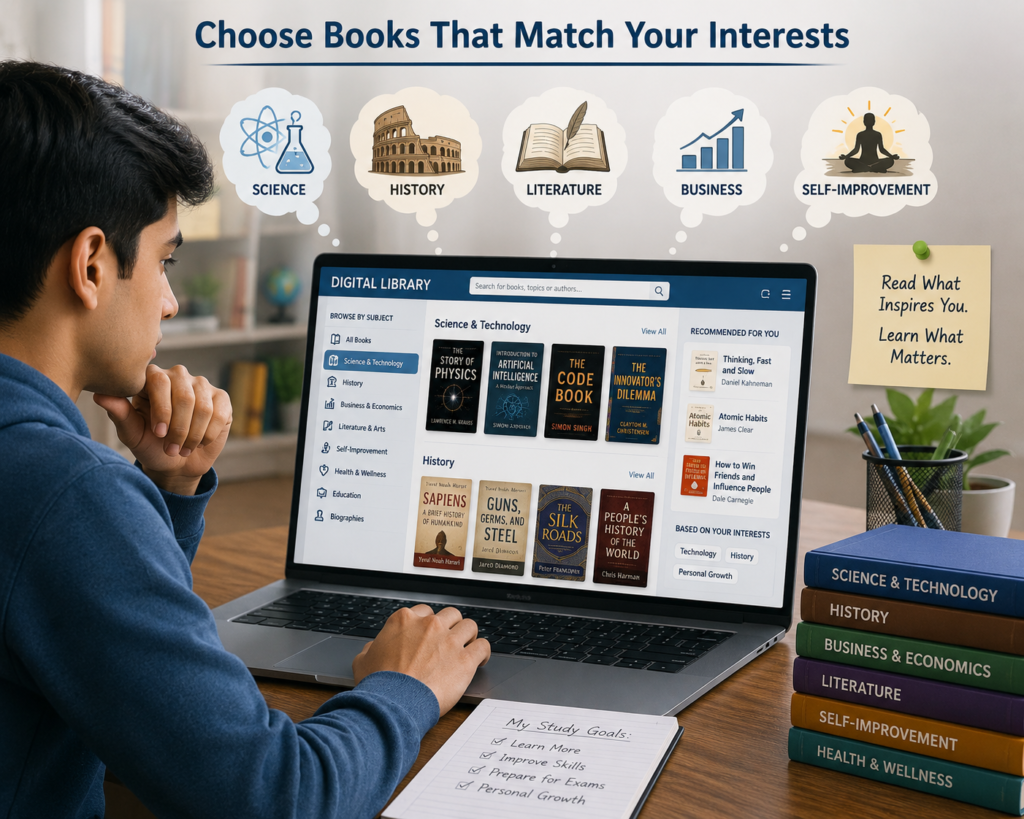
10. Choose Books That Match Your Interests
Interest can make reading easier to maintain.
If you enjoy science, you may be more motivated to read books about:
- Space.
- Biology.
- Technology.
- Scientific discoveries.
If you enjoy literature, you might explore:
- Novels.
- Poetry.
- Short stories.
- Literary criticism.
Interest does not have to be the only factor, but it can make reading more enjoyable.
11. Ask a Teacher or Librarian
Teachers and librarians can be valuable sources of recommendations.
A teacher may know which books:
- Explain a topic clearly.
- Match the curriculum.
- Provide suitable background information.
- Are appropriate for your academic level.
Librarians can also help students search catalogues and identify resources.
Asking for guidance can save time when you are unsure where to begin.
12. Use Library Catalogues
Library catalogues allow readers to search for books by:
- Title.
- Author.
- Subject.
- Keyword.
- Publication.
Digital library catalogues can be especially useful because they may provide filters that help narrow the results.
Instead of browsing randomly, search for the exact topic you need.
13. Read Book Reviews
Book reviews can help you understand how other readers and reviewers responded to a book.
A useful review may discuss:
- Content.
- Writing style.
- Strengths.
- Weaknesses.
- Organization.
- Intended audience.
However, do not rely on one review alone.
Different readers have different expectations, so compare several opinions when practical.
14. Check Whether the Book Is Well-Supported
For nonfiction and academic books, check whether the author provides:
- References.
- Citations.
- Bibliography.
- Sources.
- Research evidence.
This can be particularly important when you intend to use the book for an academic assignment.
A book that makes many factual claims without explaining their basis should be evaluated carefully.
15. Consider the Length
A long book is not automatically better than a short one.
If you have limited time, a concise and well-organized book may be more useful.
Before choosing a long book, ask:
Do I have enough time to read it properly?
A book that you can actually finish and understand may be more useful than a much longer book that you only partially read.
16. Think About Your Available Time
Students often have several subjects and responsibilities.
Consider your schedule before choosing additional reading.
For example:
10 minutes per day: A short book or selected chapters may be appropriate.
30 minutes per day: You can work through a longer book gradually.
Several hours available: A detailed research book may be practical.
The goal is to choose something that fits realistically into your routine.
17. Choose Books for Different Purposes
You do not need every book to serve the same purpose.
You might have:
A Study Book
For understanding your school subject.
A Reference Book
For checking specific information.
A Fiction Book
For enjoyable reading.
A Research Book
For exploring a particular topic in greater depth.
This variety can make reading more balanced.
18. Don’t Judge a Book Only by Its Cover
A beautiful cover does not tell you whether the content is useful.
Likewise, a simple cover does not mean that a book is poor quality.
Look beyond appearance and consider:
- Author.
- Topic.
- Description.
- Contents.
- Publication information.
- Reviews.
- Your reading goal.
The actual content matters more than the cover design.
19. Consider Digital and Physical Books
Both formats can be useful.
Physical Books
Advantages may include:
- Comfortable traditional reading experience.
- Easy physical annotation when permitted.
- No electronic device required.
Digital Books
Advantages may include:
- Searchable text.
- Portable collections.
- Adjustable text size on supported devices.
- Quick access to digital resources.
The best choice depends on your personal preferences, available resources, and study situation.
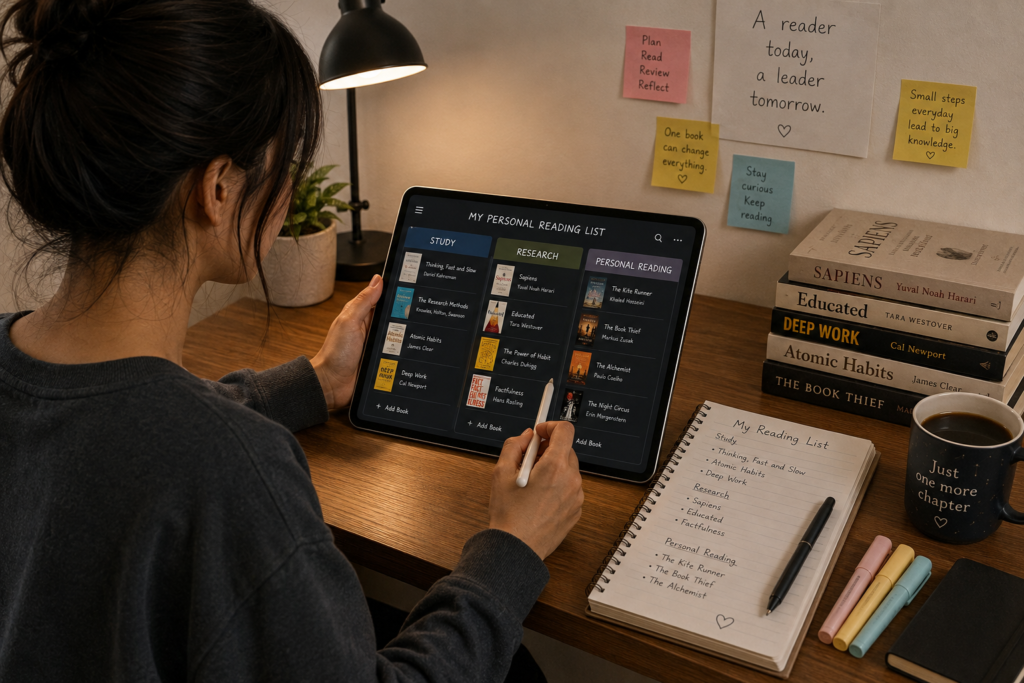
20. Create a Personal Reading List
Once you find books that interest you, create a reading list.
You can divide it into:
Study
Books related to school subjects.
Research
Books for projects and academic work.
Personal Reading
Books chosen for enjoyment.
Future Reading
Books you may want to explore later.
A reading list prevents you from forgetting useful recommendations.
How to Choose a Book for Academic Research
When selecting a research book, ask these questions:
Is the author qualified?
Look for relevant expertise.
Is the book current enough?
Consider the topic and publication date.
Does it contain references?
Check whether claims are supported.
Does it directly relate to my topic?
Relevance is essential.
Is the publisher identifiable?
Look for publication details.
Does it provide useful evidence?
A research book should contribute meaningful information to your project.
How to Choose a Book for Enjoyment
Choosing a book for personal reading can be more flexible.
Consider:
- Genre.
- Story idea.
- Writing style.
- Author.
- Length.
- Reviews.
- Personal interests.
You do not have to choose a book simply because it is popular.
A good personal reading choice is one that genuinely interests you.
How to Choose a Book From a Digital Library
Digital libraries can make book selection easier because users can search large collections.
A simple process is:
Search → Filter → Preview → Evaluate → Select → Read
Search
Enter relevant keywords.
Filter
Use available subject, date, author, or format filters.
Preview
Read the description, contents, or available sample.
Evaluate
Check the author, publisher, date, and relevance.
Select
Choose the book that best matches your goal.
Read
Begin reading and take notes if needed.
Common Mistakes When Choosing Books
Choosing Only Popular Books
Popularity does not necessarily mean suitability.
Ignoring Reading Level
A book that is too difficult may make independent study frustrating.
Ignoring the Purpose
A book should match what you want to achieve.
Choosing Too Many Books
You may end up starting many books without finishing any.
Looking Only at Reviews
Reviews are opinions and should be considered alongside the actual book information.
Ignoring Publication Date
This can be a problem for subjects that change quickly
A Simple Book Selection Checklist
Before choosing a book, ask:
☐ Does it match my purpose?
☐ Is the topic relevant?
☐ Is the reading level suitable?
☐ Is the author appropriate for the subject?
☐ Is the publication date suitable?
☐ Does the table of contents cover what I need?
☐ Are useful reviews available?
☐ Does it fit my available time?
☐ Is the information supported where necessary?
☐ Am I genuinely interested in reading it?
If most answers are yes, the book may be a good choice.
Conclusion
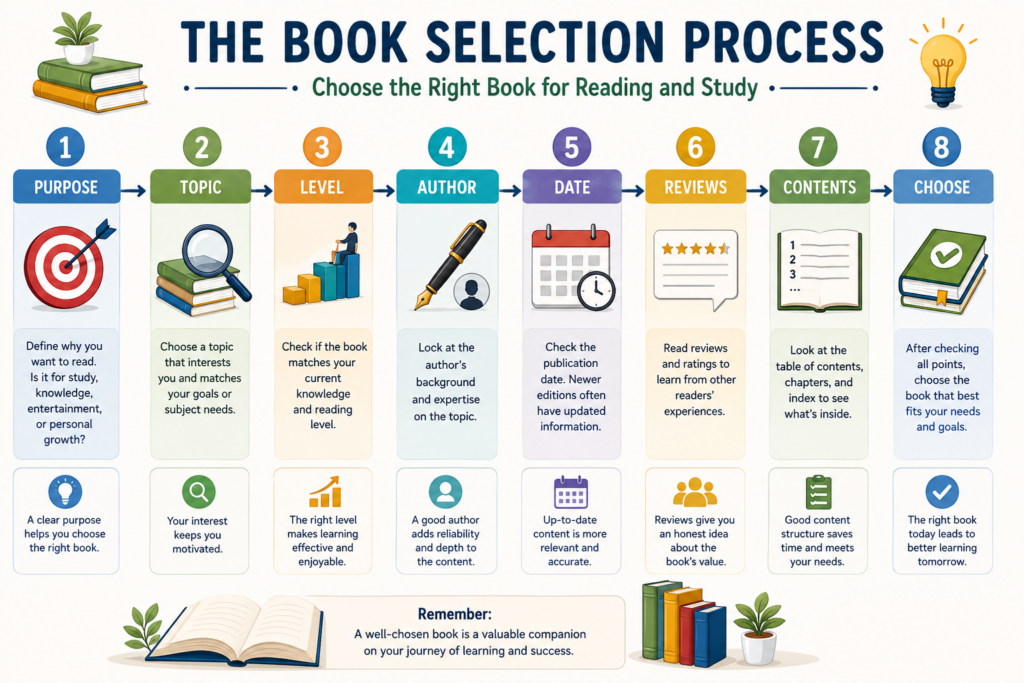
Choosing the right book is an important part of developing a successful reading and study routine.
Students should not choose books simply because they are popular, attractive, or recommended by everyone else. Instead, they should consider their purpose, interests, reading level, available time, and the quality and relevance of the information.
For academic study, factors such as the author’s background, publication date, references, table of contents, and publisher can be especially important. For personal reading, genre, writing style, subject, and personal interest may have greater importance.
Digital libraries can make the process easier by allowing students to search, filter, preview, and explore large collections of books and other resources.
The most important thing is to choose books intentionally. A well-selected book can improve knowledge, strengthen reading skills, support academic work, and encourage lifelong curiosity.
Instead of asking only “Which book is popular?”, ask:
“Which book is right for my purpose?”
That simple question can make your reading more meaningful and productive.
Frequently Asked Questions
1. How do I choose the right book?
Start by identifying your purpose, then consider the topic, reading level, author, publication date, contents, reviews, and available time.
2. How can students choose books for study?
Students should select books that match their subject and academic level and provide relevant, accurate, and useful information.
3. Should I read reviews before choosing a book?
Reviews can be helpful, but compare different opinions and consider the book’s actual description and contents as well.
4. Is a longer book better than a shorter book?
Not necessarily. The best book is one that provides the information or reading experience you need and can realistically complete.
5. Are digital books good for studying?
Digital books can be useful for studying because many are searchable and portable. Their usefulness depends on the book and the student’s preferences.
6. Should students read books outside their school subjects?
Yes. Reading outside the curriculum can expose students to new ideas, subjects, vocabulary, and perspectives.
7. How many books should I read at once?
There is no fixed number. Choosing a manageable number can help you focus and finish what you start.
8. Why is the author’s background important?
An author’s background can help readers understand whether they have relevant knowledge or experience in the subject, particularly for academic and nonfiction books.