
Introduction
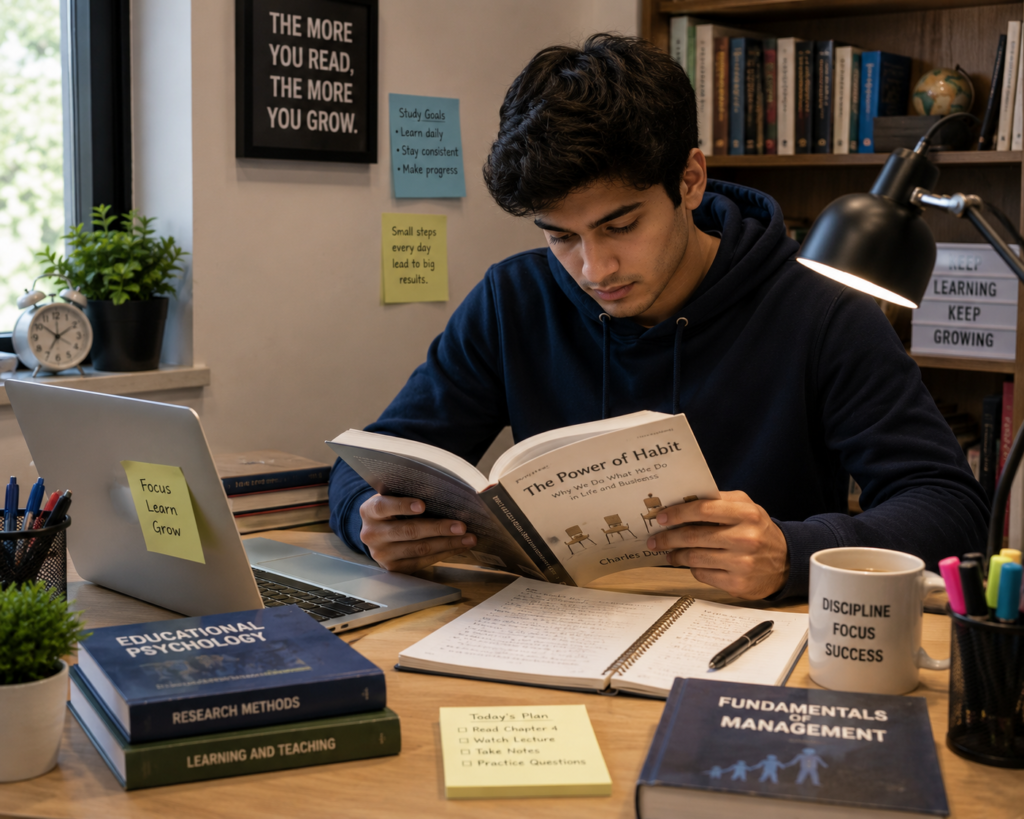
Reading is an essential part of education, but it is also a skill that students can continue developing throughout their lives. Textbooks, novels, research papers, newspapers, educational articles, and digital resources all provide opportunities to learn something new.
For students, reading every day can support academic learning while also developing skills that are useful outside the classroom. Regular reading exposes students to new vocabulary, different ideas, and a variety of writing styles. It can also encourage curiosity and independent learning.
In a world where students receive information from many digital platforms, developing the ability to read carefully and understand information is more important than ever.
Daily reading does not have to mean spending hours with a book. A consistent, manageable routine can provide meaningful benefits over time.
1. Improves Reading Comprehension
Reading comprehension is the ability to understand and interpret written information. It is important in almost every school subject.
Students who regularly read different types of material have more opportunities to practice identifying main ideas, understanding context, recognizing important details, and connecting information.
These skills can help students understand textbooks, examination questions, research materials, and written instructions more effectively.
2. Expands Vocabulary
Reading introduces students to words they may not hear in everyday conversations.
When students encounter unfamiliar words in different contexts, they can gradually understand how those words are used. Over time, regular exposure to new vocabulary can improve both reading and writing.
Students can strengthen this benefit by keeping a vocabulary notebook and recording useful new words along with their meanings and example sentences.
3. Strengthens Concentration
Focused reading requires attention. Unlike rapidly scrolling through short pieces of online content, reading a longer article or chapter encourages students to follow information over an extended period.
Regular reading sessions provide opportunities to practice sustained attention.
Students can start with short sessions and gradually increase their reading time as they become more comfortable concentrating on longer materials.
4. Supports Academic Learning
Reading is connected to almost every academic subject.
Science students may read explanations and research articles. History students may explore historical documents and books. Computer science students may use textbooks, documentation, and technical articles.
Regular reading helps students become more comfortable with subject-specific language and concepts.
5. Develops Critical Thinking
Good reading involves more than understanding individual sentences. Students often need to compare ideas, identify evidence, recognize assumptions, and decide whether information is reliable.
Reading different perspectives gives students opportunities to think about why authors present information in particular ways.
This develops critical-thinking skills that are valuable in academic research and everyday decision-making.

6. Encourages Independent Learning
Daily reading can help students become less dependent on classroom instruction alone.
When students learn how to search for information, understand different sources, and explore topics independently, they can take greater responsibility for their education.
Digital libraries can support this process by giving students convenient access to books, research papers, journals, and other educational resources.
7. Improves Writing Skills
Reading and writing are closely connected.
Students who read regularly encounter different sentence structures, vocabulary choices, organizational methods, and writing styles. These examples can help them understand how effective writing works.
Reading different genres also teaches students how introductions, explanations, arguments, and conclusions are structured.
8. Builds General Knowledge
Reading exposes students to subjects beyond their regular classroom curriculum.
A student interested in science might discover information about space, environmental research, or new technologies. Someone interested in history might explore different civilizations and historical events.
This broader knowledge can make classroom discussions and research projects more interesting.
9. Encourages Curiosity
A good article or book often leads to new questions.
Students may read about a historical event and want to know what happened next. They may discover a scientific concept and become interested in learning more about it.
This natural curiosity encourages students to explore subjects independently and become lifelong learners.
10. Helps Students Become Better Researchers
Research requires students to find, understand, compare, and organize information.
Regular reading provides practice with these activities. Students become more familiar with identifying important information and distinguishing between main ideas and supporting details.
When using digital libraries or online resources, students should also learn to evaluate the credibility of sources and use information responsibly.

Conclusion
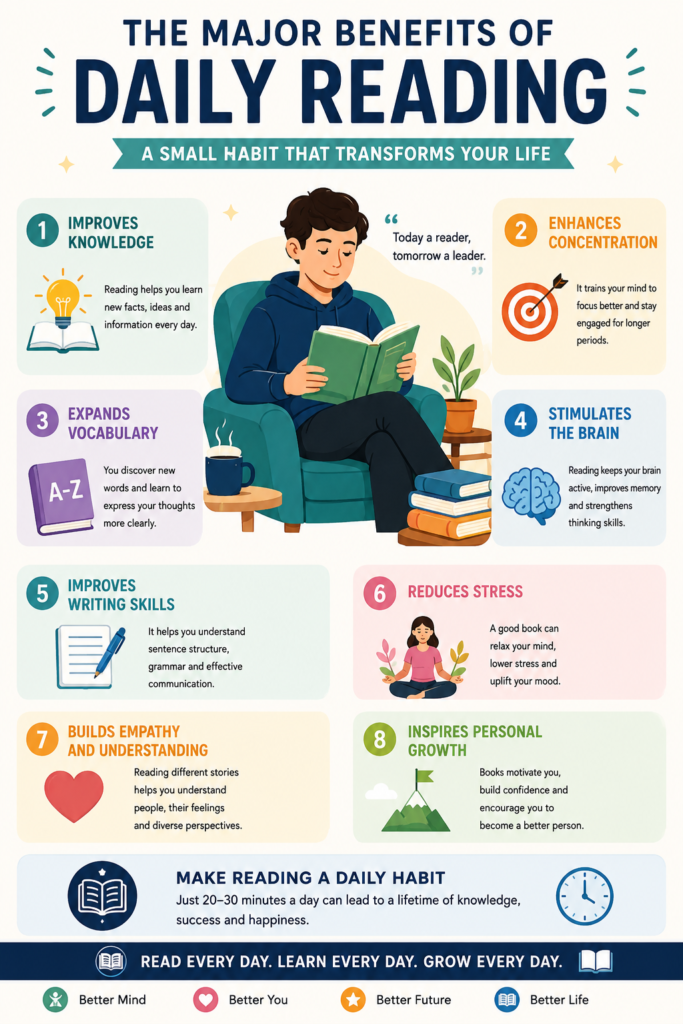
Reading every day is a simple habit that can support many aspects of student learning. It can improve comprehension, expand vocabulary, strengthen concentration, develop critical thinking, and encourage independent research.
Students do not need to read for several hours to experience these benefits. The most important factor is consistency. Even a short daily reading session can provide valuable practice and gradually develop stronger reading skills.
Whether students choose printed books, eBooks, research papers, or educational articles, regular reading can become an important part of their academic journey.
By making reading a normal part of everyday life, students can build skills that remain useful throughout education and beyond.
Frequently Asked Questions
1. Why should students read every day?
Daily reading gives students regular practice in comprehension, vocabulary, concentration, critical thinking, and independent learning.
2. How much should a student read each day?
There is no universal requirement. Starting with a manageable period, such as 15–30 minutes, can help students establish consistency.
3. Can digital reading provide educational benefits?
Yes. eBooks, academic articles, and digital library resources can provide valuable educational information when used appropriately.
4. Does reading improve vocabulary?
Regular exposure to new words and their context can help students expand their vocabulary.
5. Can reading improve writing?
Yes. Reading exposes students to different vocabulary, sentence structures, writing styles, and methods of organizing ideas.
6. How does reading support research?
Reading helps students learn how to identify important information, compare sources, understand evidence, and organize ideas.
7. Is reading only useful for language subjects?
No. Reading is important in science, mathematics, history, computer science, social studies, and almost every other academic field.
8. How can students make reading a daily habit?
Students can choose a regular reading time, start with a small goal, select interesting material, and reduce distractions during reading sessions.