

Introduction
Reading regularly can be one of the most rewarding habits you develop. A good book can introduce new ideas, improve vocabulary, strengthen comprehension, and provide a welcome break from a busy routine. Yet many people genuinely want to read more but struggle to turn that intention into a consistent habit.
The problem is often not a lack of interest. Busy schedules, digital distractions, difficult books, and unrealistic goals can make reading feel like another task on a long to-do list. The good news is that building a reading habit does not require reading for several hours every day. A few focused minutes, repeated consistently, can gradually become a natural part of your routine.
This guide explains practical ways to develop a daily reading habit and maintain it over time. The goal is not to compete with anyone else or finish a certain number of books. Instead, it is to create a sustainable routine that makes reading useful, enjoyable, and easy to maintain.
Why Develop a Daily Reading Habit?
Regular reading provides benefits that extend beyond simply finishing books. Reading exposes you to new vocabulary, ideas, experiences, and perspectives. For students, it can support comprehension and academic learning. For adults, it can help maintain knowledge and encourage lifelong learning.
A daily reading routine can also create dedicated time away from constant notifications and entertainment. Even a short period of focused reading gives you an opportunity to concentrate on one subject without continually switching between tasks.
The key is consistency. Reading occasionally may be enjoyable, but a regular routine makes the activity much easier to maintain.
1. Start With a Small Goal
One of the biggest mistakes people make when starting a new habit is setting an unrealistic target.
Instead of deciding to read fifty pages every day, begin with something manageable. You might choose ten pages, one chapter, or fifteen minutes of reading.
A small goal feels achievable even on busy days. Once the habit becomes established, you can gradually increase your reading time if you want to.
2. Choose Books That Interest You
Reading becomes much easier when the subject genuinely interests you.
You do not have to begin with the most difficult or famous book available. Choose something that matches your current interests and reading level.
You might explore:
- Fiction
- Biography
- History
- Science
- Technology
- Personal development
- Literature
- Educational books
- Short stories
Enjoyment makes consistency easier.
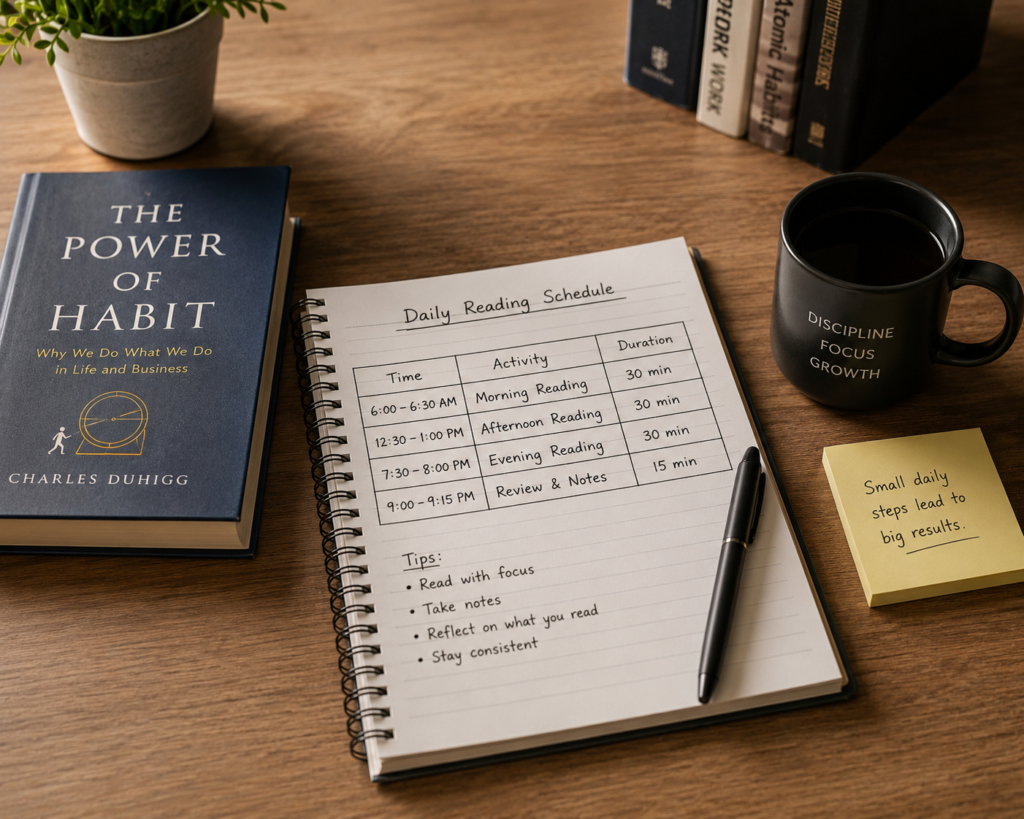
3. Choose a Regular Reading Time
A specific reading time can turn reading from an intention into a routine.
For example, you might read:
- After breakfast
- During a quiet afternoon break
- After completing your studies
- Before bedtime
The exact time is less important than choosing a period you can realistically maintain.
4. Create a Reading-Friendly Environment
Your environment can make a major difference.
Find a comfortable place with sufficient lighting and minimal distractions. Keep your reading material nearby so you do not have to search for it every time you want to read.
If you use a digital library, prepare your eBook or article before beginning your session so you can start reading immediately.
5. Remove Distractions Before Reading
Distractions can make even a short reading session difficult. Smartphones, social media notifications, television, and unrelated browser tabs can interrupt concentration.
Before you begin, try to create a simple reading routine. Silence unnecessary notifications, put distracting devices aside when possible, and keep only the materials you need nearby.
You do not need a completely silent environment. The goal is simply to reduce interruptions so that you can focus on the material.
6. Keep Your Book Easily Available
A simple way to read more often is to make reading convenient.
Keep your current book in a place where you will naturally see it. If you use digital resources, save your current eBook or article somewhere easy to access.
When reading material is readily available, you are more likely to use a few spare minutes for reading instead of automatically opening social media or another distracting app.
7. Use Digital Libraries to Expand Your Choices
Digital libraries can make building a reading habit easier because they provide access to many types of resources in one place.
Depending on the collection and access rights, you may find eBooks, academic articles, journals, educational materials, and other digital resources.
Having different types of reading material available means you can choose something appropriate for your mood, interests, or learning goals.
Always use resources according to the library’s access, copyright, and licensing conditions.

8. Keep Track of Your Progress
Tracking your reading progress can make the habit more satisfying.
You can maintain a simple reading list containing:
- Book title
- Author
- Date started
- Date completed
- A short note about what you learned
You can also record the number of pages or minutes you read each day.
The purpose of tracking is not to pressure yourself. It simply helps you see your progress and understand your reading patterns.
9. Don’t Be Afraid to Change Books
Sometimes a book simply does not match your interests or current reading level. Continuing with it only because you feel obligated can make reading feel like a chore.
If a book is not useful or enjoyable, you can pause it and choose another appropriate resource. This does not mean you have failed. It means you are learning what type of material works best for you.
The goal is to develop a lasting reading habit, not to finish every book you start.
10. Make Reading a Long-Term Habit
The most important part of developing a reading habit is consistency.
You will probably have days when you cannot complete your usual reading session. That is normal. Missing one day does not mean you have to abandon the routine.
Simply return to your reading schedule when you can. A sustainable habit is built through repeated effort over time rather than perfection.
Common Problems When Building a Reading Habit
Lack of Time
Busy schedules can make reading difficult. Start with short sessions instead of waiting for a large block of free time.
Losing Interest
If your current book does not interest you, try a different subject or format.
Digital Distractions
Notifications and social media can interrupt reading. Create a distraction-free period during your reading session.
Unrealistic Goals
Trying to read too much too quickly can make the habit difficult to maintain. Start small and increase gradually if necessary.
Tips for Students
Students can connect reading with their existing study routines.
For example, they can read a few pages before starting homework, review an educational article after class, or use a digital library to explore additional material related to a lesson.
It is also helpful to distinguish between study reading and reading for enjoyment. Both have value, and having a mixture can keep the habit interesting.
Benefits of a Consistent Reading Habit
A regular reading routine can help develop:
- Better reading comprehension
- Stronger vocabulary
- Improved concentration
- Broader knowledge
- Better research skills
- Greater exposure to different perspectives
- Stronger independent-learning habits
For students and lifelong learners, these skills can support learning across many different subjects.
Conclusion
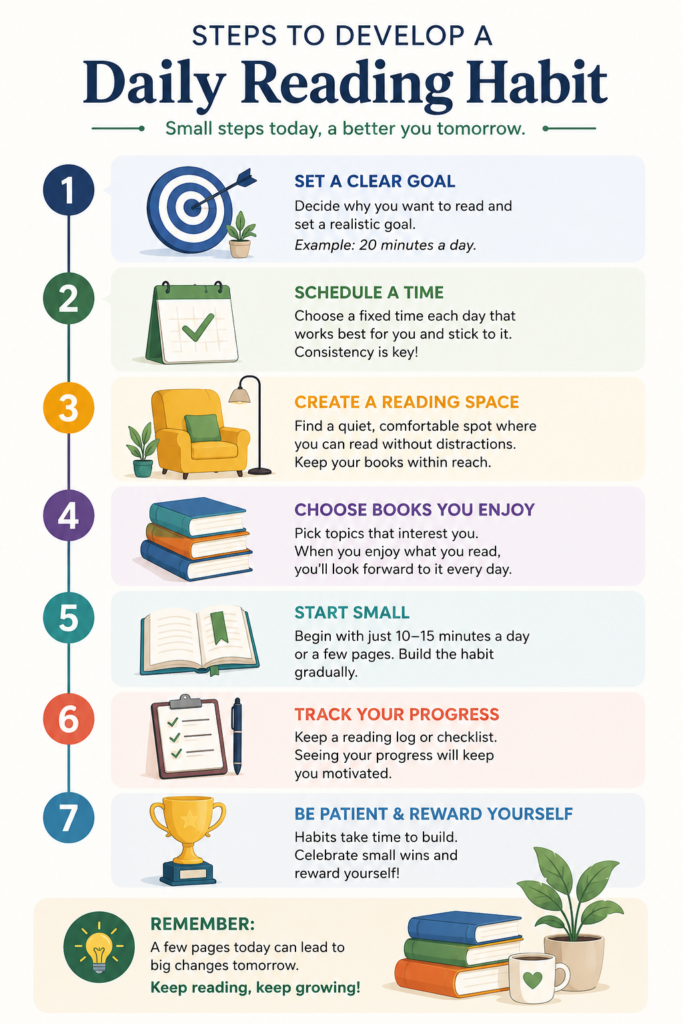
Developing a daily reading habit does not require complicated techniques. Start with a small goal, choose material that interests you, select a regular reading time, and create an environment where you can concentrate.
Digital libraries can make the process even more convenient by giving readers access to a wide range of educational and reading resources. However, the most important factor is consistency.
Do not worry about how quickly you finish books. Focus on building a routine that you can maintain. Even a short reading session can become meaningful when it is repeated regularly.
Over time, reading can become a natural part of your daily life and a valuable tool for learning, curiosity, and personal growth.
Frequently Asked Questions
1. How can I start a daily reading habit?
Start with a small target, such as 10–15 minutes a day, and choose a regular time that fits naturally into your schedule.
2. How long should I read every day?
There is no single correct amount. Even a short, focused reading session can help establish consistency.
3. What should I read if I am a beginner?
Choose a topic that genuinely interests you and a book or article appropriate for your current reading level.
4. How can I avoid distractions while reading?
Silence unnecessary notifications, choose a quiet place, and keep unrelated devices or applications away during your reading session.
5. Can digital libraries help me read more?
Yes. Digital libraries can provide convenient access to eBooks, journals, research papers, and other resources, depending on their collections and access policies.
6. What should I do if I lose interest in a book?
You can pause the book and try another suitable title. Finding material that interests you can make reading more enjoyable.
7. Is it important to track reading progress?
Tracking is optional, but a simple reading list or journal can help you stay organized and see your progress.
8. What is the most important reading habit?
Consistency is one of the most important factors. A manageable routine that you can maintain is usually better than an unrealistic reading target.