

Introduction
Reading is one of the most valuable habits a person can develop. It expands knowledge, improves vocabulary, strengthens critical thinking, and supports both academic and personal growth. Whether you enjoy novels, textbooks, research papers, or articles, regular reading helps you understand new ideas and stay informed.
In today’s fast-paced digital world, many people struggle to maintain consistent reading habits. Notifications, social media, and busy schedules often reduce the time available for focused reading. Fortunately, developing better reading habits does not require dramatic lifestyle changes. Small, consistent improvements can make reading more enjoyable and productive.
This guide explores practical reading habits that help students, professionals, and lifelong learners improve concentration, retain information, and build a lasting love for reading.
Why Reading Habits Matter
Reading is much more than a hobby. Strong reading habits improve communication skills, expand knowledge, and encourage continuous learning. Students who read regularly often perform better in school because they develop stronger comprehension and analytical skills.
For professionals, reading supports career growth by helping them stay updated with industry trends and new ideas. Reading also encourages creativity by exposing people to different perspectives and experiences.
Developing a daily reading habit can improve confidence, decision-making, and problem-solving abilities throughout life.
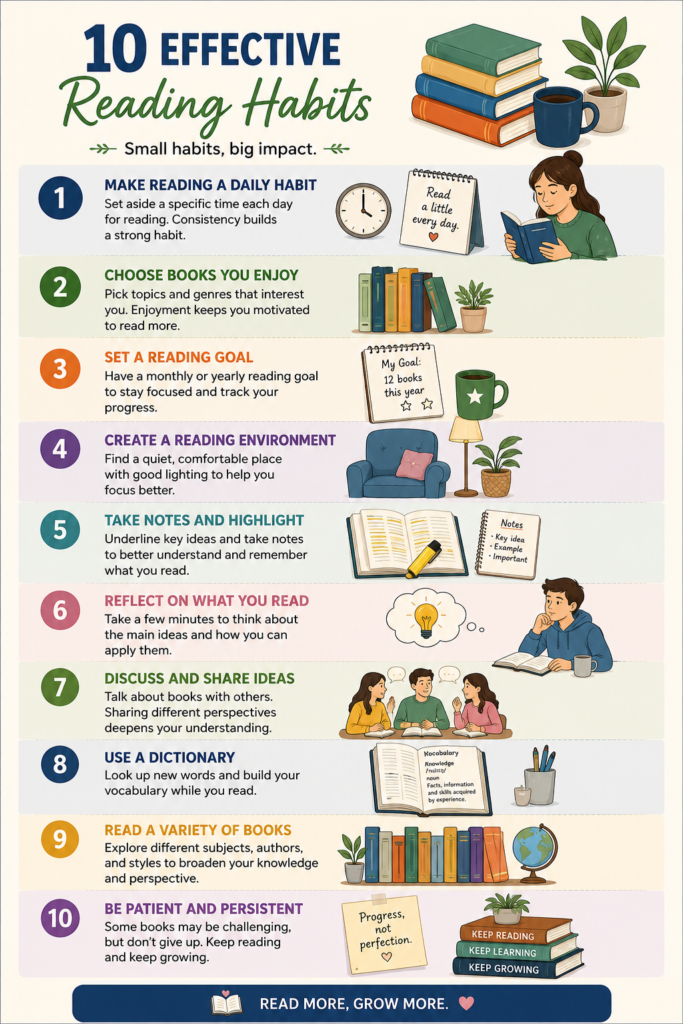
1. Set a Daily Reading Goal
One of the easiest ways to build a reading habit is to set a realistic daily goal.
Instead of trying to read an entire book in one sitting, start with a manageable target such as:
- 20 minutes of reading each day
- One chapter before bedtime
- Ten pages every morning
- One educational article each day
Consistency is more important than reading for long periods occasionally. Small daily sessions gradually become a natural part of your routine.
2. Create a Comfortable Reading Environment
Your surroundings affect your concentration.
Choose a quiet, well-lit place where you can focus without unnecessary distractions. Keep your phone on silent if possible and use a comfortable chair or desk that supports good posture.
A peaceful reading environment helps improve understanding and reduces interruptions.

3. Read Different Types of Books
Reading only one type of content may limit your learning.
Try exploring different categories such as:
- Fiction
- Non-fiction
- Biographies
- Science
- History
- Technology
- Business
- Self-development
- Educational articles
Reading a variety of topics broadens your knowledge and keeps the habit interesting.
4. Take Notes While Reading
Writing down important ideas helps improve understanding and memory.
You can:
- Highlight useful information.
- Write short summaries.
- Record new vocabulary.
- Note interesting quotes.
- Save ideas for future projects.
Active reading improves long-term retention and makes it easier to review important concepts later.
5. Keep a Reading Journal
A reading journal is an excellent way to remember what you have learned. After finishing a chapter or article, write a few sentences about the main ideas, important facts, or lessons you discovered.
A reading journal helps you:
- Improve memory retention.
- Track your reading progress.
- Reflect on new ideas.
- Build better writing and critical thinking skills.
Even a few minutes of note-taking after each reading session can make a significant difference.
6. Build a Consistent Reading Routine
Reading becomes a habit when it is part of your daily schedule.
Choose a regular time that works best for you, such as:
- Early in the morning.
- During lunch breaks.
- After school or work.
- Before going to bed.
Reading at the same time every day helps your brain develop a routine, making it easier to stay consistent.
7. Limit Distractions
Concentration is essential for effective reading.
Before starting a reading session:
- Turn off unnecessary notifications.
- Keep your phone away if possible.
- Close unrelated browser tabs.
- Find a quiet place to read.
Reducing distractions allows you to focus on understanding and remembering the information.
8. Discuss What You Read
Talking about books or articles with friends, classmates, or teachers helps reinforce what you have learned.
You can:
- Share interesting ideas.
- Ask questions.
- Compare different opinions.
- Recommend useful books.
Discussions improve comprehension and expose you to new perspectives.
9. Use Both Printed Books and Digital Resources
There is no need to choose only one format.
Printed books offer a comfortable reading experience with fewer digital distractions, while digital libraries provide convenience, search features, and access to updated resources.
Using both formats allows you to enjoy the advantages of each depending on your situation.

10. Read for Understanding, Not Just Speed
Many people focus only on finishing books quickly.
However, effective reading is about understanding, analyzing, and remembering information rather than simply turning pages.
Take your time with challenging topics, review important sections, and think about how new information connects with what you already know.
Common Reading Mistakes
Avoid these habits that reduce learning effectiveness:
- Reading without clear goals.
- Skipping difficult sections.
- Reading while constantly checking your phone.
- Choosing only easy materials.
- Not reviewing important information.
- Reading for long periods without taking short breaks.
Recognizing these mistakes helps you become a more focused and confident reader.
Benefits of Strong Reading Habits
Developing consistent reading habits provides many long-term benefits.
Regular readers often:
- Improve vocabulary and communication skills.
- Strengthen concentration and memory.
- Increase general knowledge.
- Develop critical thinking skills.
- Perform better academically.
- Reduce stress through enjoyable reading.
- Stay informed about current topics.
- Support lifelong learning and career development.
Reading is an investment in personal growth that continues to provide value throughout life.
Conclusion
Strong reading habits are one of the foundations of lifelong learning. By setting realistic goals, creating a comfortable reading environment, limiting distractions, taking notes, and reading consistently, anyone can become a more effective reader.
Whether you prefer printed books or digital libraries, the key is to read regularly and thoughtfully. Every page you read expands your knowledge, improves your thinking, and helps you grow personally and professionally.
Start with small daily reading sessions, stay consistent, and enjoy the lifelong benefits that reading brings.
Frequently Asked Questions (FAQs)
1. Why are reading habits important?
Reading habits improve knowledge, vocabulary, concentration, and critical thinking while supporting academic and personal development.
2. How much should I read every day?
Even 20–30 minutes of focused reading each day can help build a strong reading habit.
3. Is reading digital books as useful as printed books?
Yes. Both digital and printed books have advantages, and using both can provide a balanced learning experience.
4. How can students develop better reading habits?
Students should set daily reading goals, minimize distractions, take notes, and read a variety of educational materials.
5. What are the benefits of keeping a reading journal?
A reading journal helps improve memory, organize ideas, and track learning progress.
6. Can reading improve academic performance?
Yes. Regular reading strengthens comprehension, vocabulary, analytical thinking, and research skills, which contribute to better academic results.
7. What is the biggest obstacle to consistent reading?
Distractions such as social media, notifications, and busy schedules are common obstacles. Establishing a daily reading routine can help overcome them.
8. Is reading only fiction enough?
No. Reading a mix of fiction, non-fiction, educational articles, biographies, and research materials provides broader knowledge and different perspectives.