
Introduction
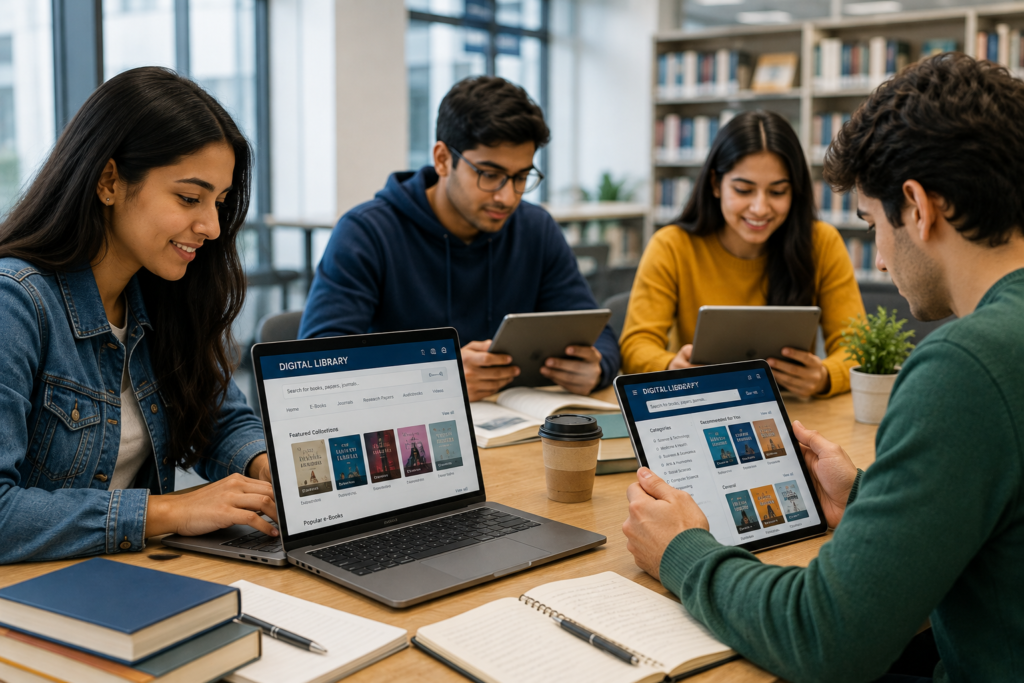
In today’s digital world, access to knowledge has become easier than ever before. Instead of visiting a physical library and searching through shelves of books, people can now access thousands of books, research papers, journals, and educational resources from their computers, tablets, or smartphones. This convenience has made digital libraries an important part of modern education and lifelong learning.
A digital library is more than just a collection of electronic books. It is an organized platform that stores, manages, and provides access to digital resources. These resources may include eBooks, academic journals, research articles, historical documents, magazines, multimedia files, and other educational materials. Many universities, schools, and research institutions rely on digital libraries to support students, teachers, and researchers.
The growing popularity of digital libraries is changing the way people read, study, and conduct research. Instead of being limited by location or library opening hours, users can often access valuable information whenever they need it. Whether someone is preparing for an examination, writing a research paper, learning a new skill, or simply reading for enjoyment, digital libraries offer a practical and efficient solution.
This article explains what a digital library is, how it works, its main features, advantages, challenges, and why it has become an essential part of education in the modern world.
What Is a Digital Library?
A digital library is an online collection of organized digital resources that allows users to search, read, and access educational or informational content electronically. Unlike traditional libraries, which mainly store printed books, digital libraries store information in digital formats such as PDF, EPUB, HTML, audio, and video.
The purpose of a digital library is to make knowledge more accessible. Users can search for specific books, authors, subjects, or keywords within seconds, making the learning process much faster and more convenient.
Digital libraries are used by universities, schools, public institutions, researchers, professionals, and individual readers around the world. Some digital libraries provide free access to public-domain or open-access materials, while others require institutional or personal subscriptions for copyrighted resources.
The Evolution of Digital Libraries
Libraries have always played an important role in preserving knowledge. For centuries, books and manuscripts were stored in physical buildings where readers had to visit in person. As technology advanced, libraries began converting printed materials into digital formats, allowing users to access them online.
The development of high-speed internet, cloud storage, and mobile devices further accelerated the growth of digital libraries. Today, millions of educational resources are available online, making it possible for learners to study from almost anywhere.
Modern digital libraries continue to expand by offering advanced search features, personalized recommendations, multilingual content, and mobile-friendly reading experiences. They have become an essential resource for students, educators, researchers, and lifelong learners.
Key Features of a Digital Library
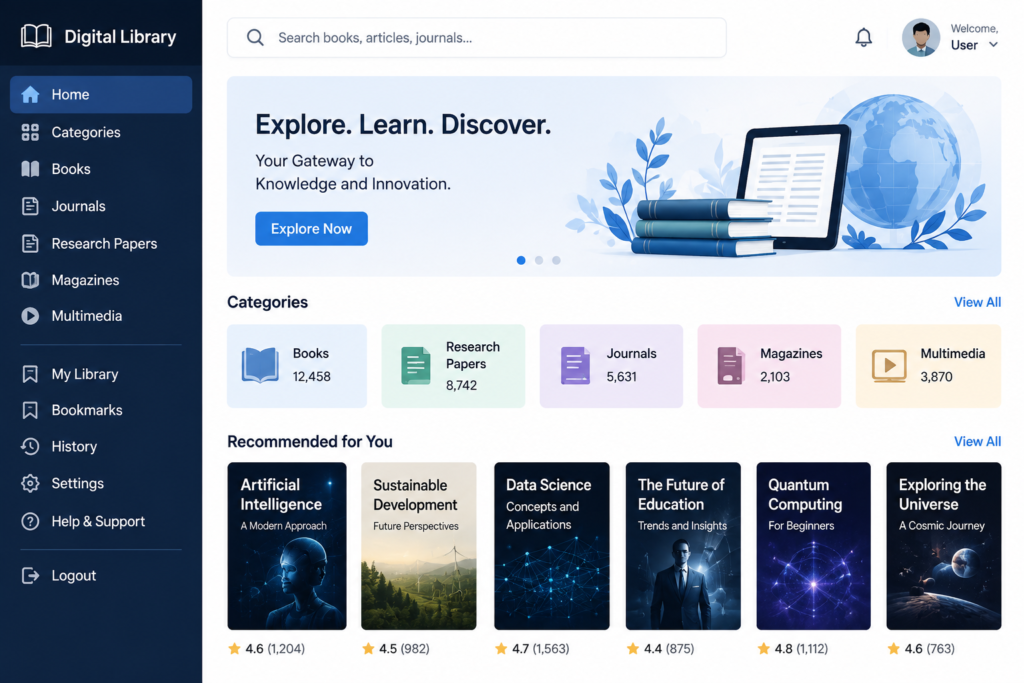
Digital libraries have become an essential part of modern education because they combine technology with organized knowledge. Unlike a simple collection of PDF files, a digital library is designed to help users quickly discover, access, and manage information. Several important features make digital libraries valuable for students, teachers, researchers, and lifelong learners.
Easy Search Functionality
One of the biggest advantages of a digital library is its powerful search capability. Instead of browsing shelves manually, users can search by title, author, subject, keyword, ISBN, or publication year. This saves time and allows readers to locate relevant resources within seconds.
24/7 Accessibility
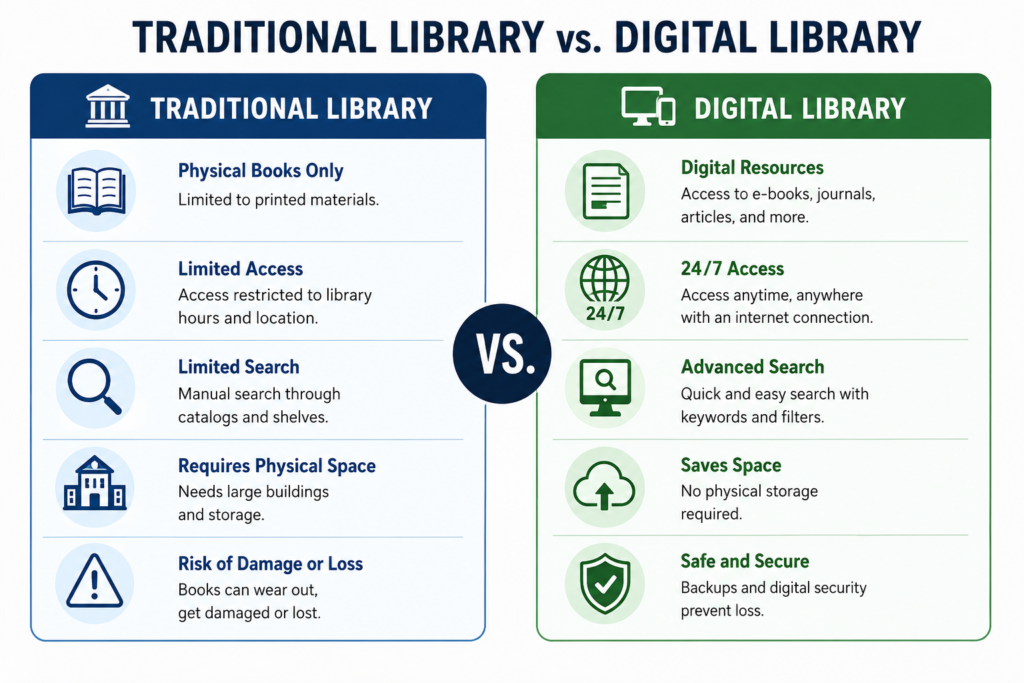
Traditional libraries usually operate during fixed hours, while digital libraries can often be accessed at any time. Whether someone wants to study early in the morning or late at night, digital resources are available whenever they are needed, provided the user has the required access.
Multiple File Formats
Digital libraries provide content in different formats to meet different needs. Common formats include PDF for documents, EPUB for flexible eBooks, HTML for web-based reading, and audio or video files for multimedia learning. This flexibility allows users to choose the format that best suits their device and reading preferences.
Organized Collections
Resources are carefully categorized into subjects, topics, authors, and publication types. Good organization helps readers find related material without wasting time.
Cloud-Based Access
Many digital libraries use cloud technology, allowing users to continue reading from different devices. A student may begin reading on a laptop and later continue on a smartphone or tablet without losing progress.
Types of Digital Libraries
Digital libraries serve different purposes depending on the organization that manages them.
Academic Digital Libraries
Universities and colleges maintain digital libraries that provide textbooks, journals, dissertations, conference papers, and research databases. These collections support teaching, learning, and academic research.
Public Digital Libraries
Public digital libraries focus on providing general reading materials for everyone. They often include literature, history, biographies, educational books, and public-domain works.
Institutional Repositories
Many universities preserve research produced by their faculty and students through institutional repositories. These collections increase the visibility of academic work and help preserve valuable knowledge.
Specialized Digital Libraries
Some digital libraries concentrate on a specific subject, such as medicine, engineering, law, agriculture, or computer science. These resources provide in-depth information for professionals and researchers working in those fields.
How Digital Libraries Work
Although users usually experience only a simple search interface, digital libraries rely on sophisticated systems behind the scenes.
When books, research papers, or documents are added, librarians or administrators attach descriptive information such as the title, author, keywords, publication date, language, and subject. This information, known as metadata, helps search engines locate relevant resources quickly.
When a user enters a search term, the system compares it with the stored metadata and returns matching results. Many digital libraries also offer filters that allow users to narrow results by publication year, language, file type, or subject area.
Some platforms allow readers to bookmark pages, highlight important text, create personal reading lists, and download available resources for offline use.
Benefits of Digital Libraries for Students
Students are among the biggest beneficiaries of digital libraries.
Instead of depending only on printed textbooks, students can explore multiple sources to gain a broader understanding of a topic. Access to updated research papers, reference books, and educational articles helps improve assignments, presentations, and examination preparation.
Digital libraries also encourage independent learning. Students can study beyond classroom lectures, explore new topics, and strengthen critical thinking skills through additional reading.
Another important advantage is convenience. Learners living in remote areas may not have access to large physical libraries, but internet connectivity allows them to reach educational resources that would otherwise be unavailable.
Advantages of Digital Libraries
Digital libraries have transformed the way people access and use information. They provide numerous advantages that benefit students, educators, researchers, and general readers alike.
1. Access Anytime and Anywhere
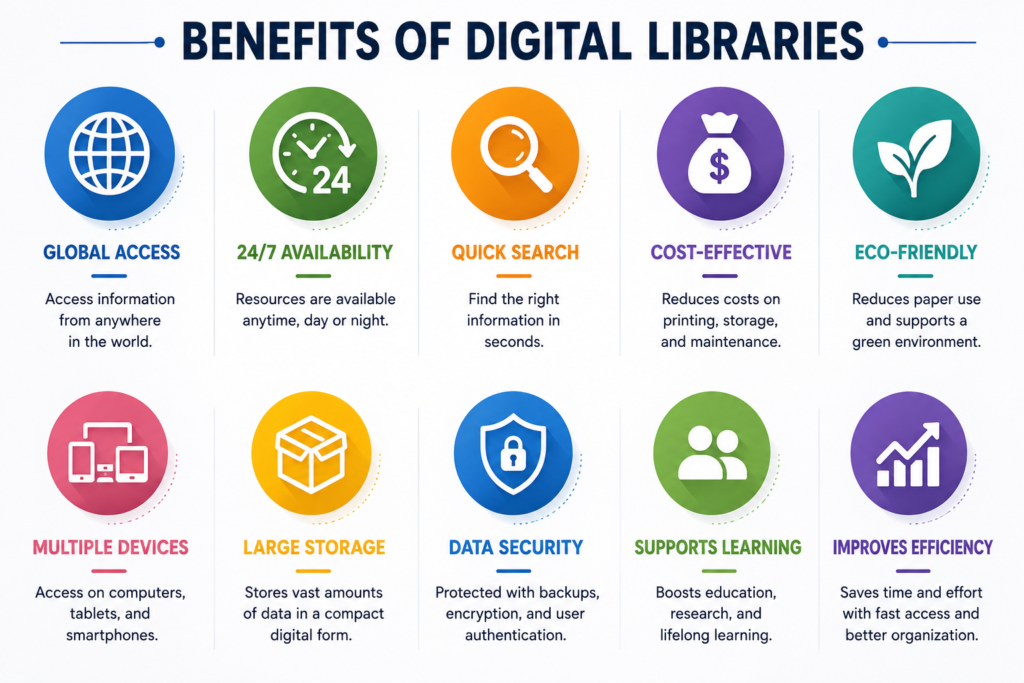
One of the greatest strengths of a digital library is convenience. Users can often access digital resources from home, school, university, or while traveling. As long as they have a compatible device and the necessary access rights, learning is no longer restricted to a physical location.
2. Saves Time
Searching through shelves in a traditional library can take considerable time. A digital library allows users to locate books, articles, or journals within seconds using keywords, author names, or titles. This efficient search process makes studying more productive.
3. Cost-Effective Learning
Many digital libraries provide free or affordable access to educational resources. Open-access collections and public-domain materials help students learn without spending large amounts of money on printed books.
4. Environmentally Friendly
Digital resources reduce the need for paper, printing, and physical storage. While electronic devices still have environmental impacts, digital libraries can reduce paper consumption and make knowledge sharing more sustainable.
5. Supports Lifelong Learning
Learning does not end after graduation. Professionals, teachers, and individuals who enjoy reading can continue developing their knowledge through digital libraries throughout their lives.
Benefits for Researchers
Researchers depend on accurate and up-to-date information. Digital libraries make research faster and more efficient by providing access to scholarly articles, conference papers, dissertations, and academic journals.
Instead of visiting multiple institutions, researchers can search thousands of documents from one platform. Citation tools, advanced filters, and subject-based collections further simplify the research process.
Digital libraries also encourage collaboration by allowing researchers from different countries to access and reference similar materials, helping them stay informed about developments in their fields.
Benefits for Teachers
Teachers benefit from digital libraries in many practical ways.
They can discover updated teaching materials, lesson plans, academic references, and multimedia resources to improve classroom instruction. Instead of relying on a single textbook, teachers can introduce students to multiple perspectives and current information.
Digital libraries also support online education by providing resources that students can access independently outside the classroom.
Challenges of Digital Libraries
Although digital libraries offer many advantages, they also face certain challenges.
Internet Dependency
Many digital libraries require a stable internet connection. Users living in areas with limited connectivity may experience difficulties accessing resources.
Copyright Restrictions
Not every digital resource is freely available. Many books, journals, and research publications remain protected by copyright and may require subscriptions, institutional access, or permission from rights holders.
Digital Skills
Some users, especially beginners, may need time to learn how to search effectively, use advanced filters, or manage digital resources.
Device Availability
Accessing digital libraries generally requires a smartphone, tablet, laptop, or desktop computer. Individuals without suitable devices may face barriers to digital learning.
Tips for Using Digital Libraries Effectively
To make the most of a digital library, users should develop good research and reading habits.
- Use specific keywords instead of broad search terms.
- Apply search filters to narrow results.
- Verify publication dates when researching current topics.
- Organize useful resources into folders or reading lists.
- Take notes while reading important materials.
- Cross-check information using multiple reliable sources.
- Respect copyright and licensing conditions when using digital content.
These practices improve both learning efficiency and research quality.
The Future of Digital Libraries
Digital libraries continue to evolve as technology advances. Artificial intelligence is making search systems smarter by understanding user intent and recommending relevant materials based on reading history.
Cloud computing has improved accessibility by allowing users to synchronize their reading progress across multiple devices.
Future digital libraries may offer more personalized learning experiences, multilingual search capabilities, interactive educational resources, and improved accessibility for users with disabilities.
As technology continues to develop, digital libraries are expected to become even more important in education, research, and lifelong learning.
Conclusion
Digital libraries have fundamentally changed the way people access, share, and preserve knowledge. They provide a practical and efficient way for students, teachers, researchers, and lifelong learners to discover valuable educational resources without being limited by geographical location or library opening hours.
From academic journals and eBooks to historical documents and multimedia content, digital libraries offer a wide variety of learning materials that support education, research, and personal development. Their advanced search features, organized collections, and online accessibility make them an essential part of modern learning environments.
While digital libraries do have challenges such as internet dependency, copyright restrictions, and the need for digital literacy, their advantages greatly outweigh these limitations. As technology continues to improve, digital libraries will become even more intelligent, accessible, and user-friendly.
Whether you are a student preparing for exams, a researcher conducting academic studies, a teacher looking for educational resources, or simply someone who enjoys reading, digital libraries provide opportunities to learn continuously and expand your knowledge.
The future of education is becoming increasingly digital, and digital libraries will continue to play a central role in making information more accessible to people around the world.
Frequently Asked Questions (FAQs)
1. What is a digital library?
A digital library is an organized online collection of books, research papers, journals, and other digital resources that users can access electronically through computers, tablets, or smartphones.
2. How is a digital library different from a traditional library?
Traditional libraries primarily store printed books in physical buildings, while digital libraries provide electronic access to digital resources that can often be accessed remotely.
3. Who can benefit from digital libraries?
Students, teachers, researchers, professionals, and general readers can all benefit from digital libraries because they provide convenient access to educational and informational resources.
4. Are all digital libraries free?
No. Some digital libraries offer free public-domain or open-access resources, while others require subscriptions, institutional access, or payment for copyrighted content.
5. What types of materials are available in digital libraries?
Digital libraries may include eBooks, academic journals, research papers, magazines, newspapers, historical archives, audio recordings, videos, and multimedia educational resources.
6. Why are digital libraries important for education?
They make learning more accessible by allowing students and educators to access reliable educational materials from almost anywhere, supporting both classroom learning and independent study.
7. Can digital libraries replace traditional libraries?
Digital libraries complement traditional libraries by expanding access to information, but physical libraries continue to provide valuable spaces for community learning, printed collections, and specialized services
_________________________________________________________________________________________________________________________________________________